
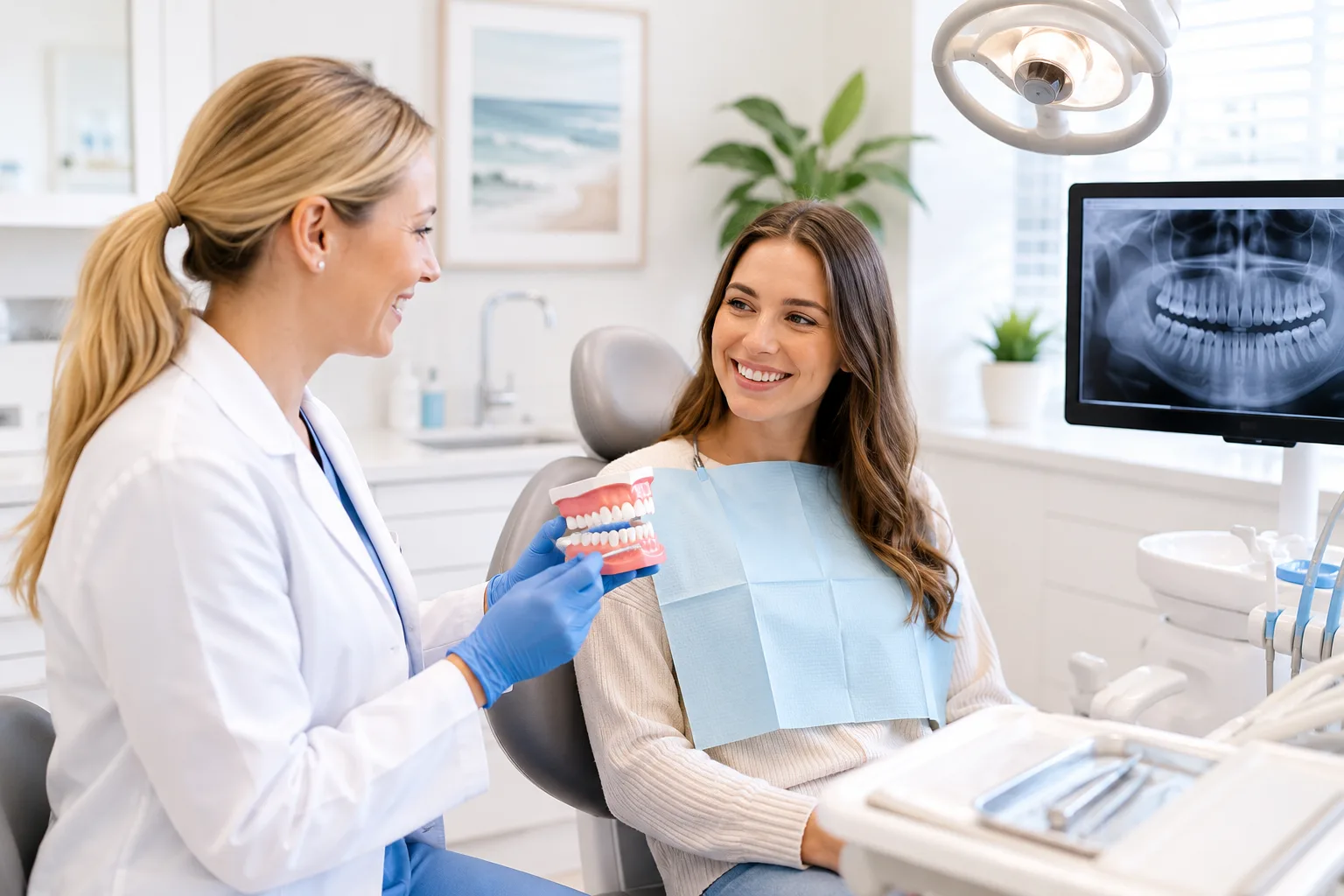
A smile does not need to look perfectly uniform to be attractive. Still, stains, chips, uneven edges, or small gaps can make some people feel less comfortable showing their teeth. For patients considering veneers in Redondo Beach, CA, understanding the options is the first step toward making a confident decision.
Dental veneers are thin, custom-made coverings placed over the visible surfaces of selected teeth. They can change a tooth’s color, shape, size, or apparent alignment while allowing the final smile to remain balanced with the patient’s facial features.
Veneers are not the best choice for every cosmetic concern. A thoughtful evaluation considers oral health, bite forces, tooth structure, personal preferences, and long-term maintenance. This guide explains what patients can generally expect and which questions are worth asking before treatment.
This article provides general educational information and is not a diagnosis or personalized treatment recommendation. A dentist must examine the teeth and gums to determine whether veneers or another option is appropriate.
What Are Dental Veneers?
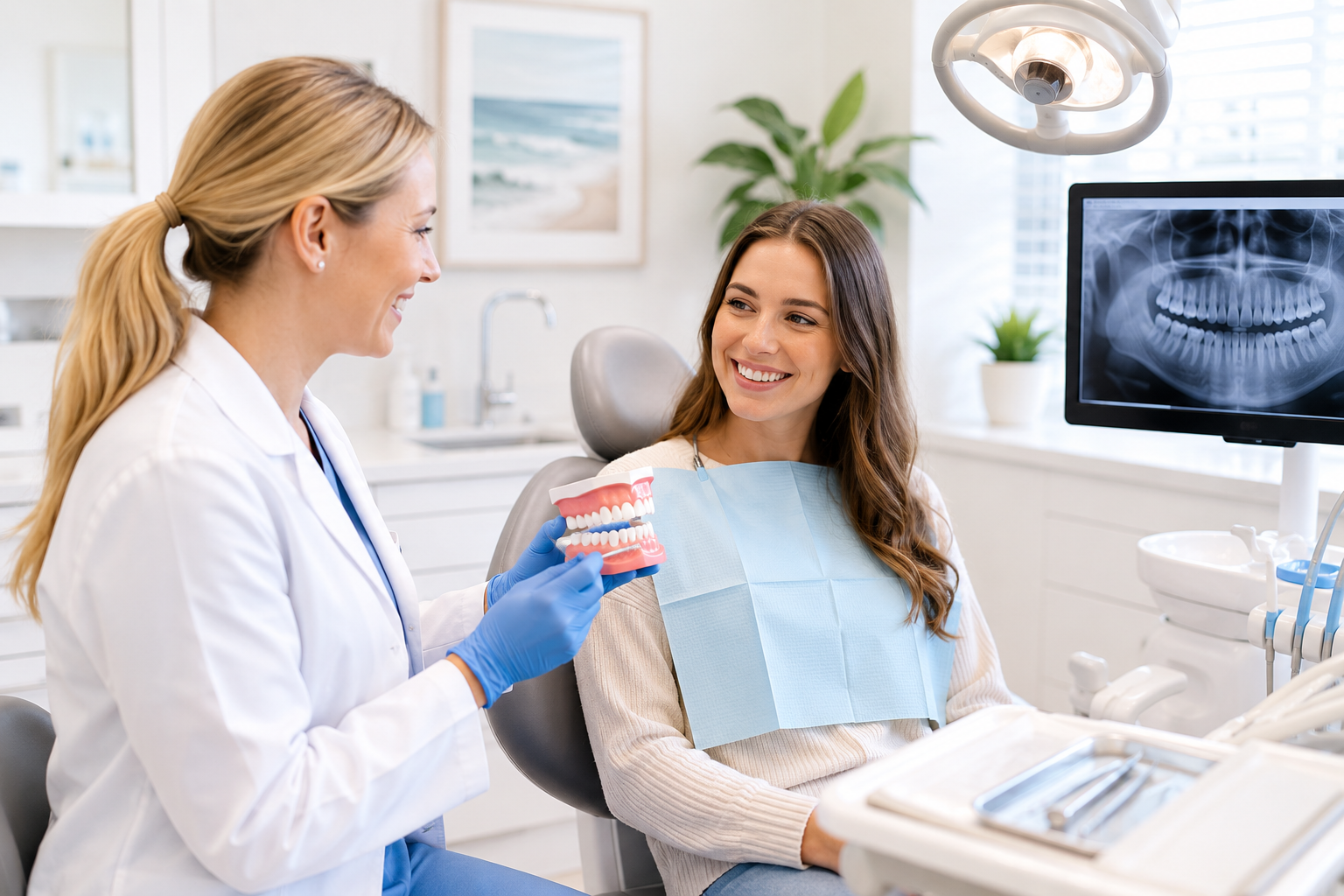
Veneers are individually designed shells that cover the front of teeth. Rather than replacing an entire tooth, as a dental crown may do, a veneer primarily changes the portion visible when a person smiles.
Veneers are commonly discussed for cosmetic concerns such as:
- Persistent or uneven tooth discoloration
- Small chips or worn-looking edges
- Minor gaps between teeth
- Teeth that appear uneven in length or shape
- Small or irregularly shaped teeth
- Minor visual misalignment in selected cases
Although veneers can change how teeth appear, they do not correct every underlying dental problem. Active decay, gum inflammation, significant bite concerns, or damaged teeth may need attention before cosmetic treatment begins.
Porcelain veneers
Porcelain veneers are fabricated to match the planned color and contours of the smile. Porcelain can reflect light in a way that resembles natural enamel, helping a carefully designed restoration blend with nearby teeth. Placement generally requires detailed planning and may involve removing a conservative amount of tooth structure, depending on the case.
Composite veneers
Composite veneers use tooth-colored resin that a dentist shapes directly on the teeth or prepares through another workflow. They may require a different level of tooth preparation and can sometimes be repaired more easily than porcelain. However, the material may respond differently to staining, wear, and polishing over time.
Neither option is automatically better. The right material depends on the condition of the teeth, the desired change, budget, bite, and willingness to maintain the restorations.
What Makes Veneers Look Natural?
Natural-looking veneers involve much more than choosing a bright shade. Teeth vary in translucency, surface texture, proportions, and color. A smile that suits one person may not fit another.
During planning, a dentist may evaluate:
- The amount of tooth displayed when smiling and speaking
- The relationship between the teeth, lips, and gums
- The color and shape of neighboring teeth
- Facial proportions and smile symmetry
- The patient’s bite and jaw movements
- Whether the patient wants a subtle refinement or a more noticeable change
Patients should feel comfortable discussing their preferences. Photographs of smiles they like can help communicate a general direction, although another person’s exact result cannot be duplicated. A personalized plan should complement the patient rather than create a one-size-fits-all appearance.
Who May Be a Candidate for Veneers?
A potential candidate generally has cosmetic concerns affecting visible teeth and enough healthy tooth structure to support treatment. Healthy gums and consistent home care are also important because the teeth beneath and around veneers still require protection.
A dentist may recommend addressing other concerns first, including cavities, gum disease, teeth grinding, or bite-related stress. Treating these issues can help create a healthier foundation for cosmetic work.
Patients who clench or grind their teeth should mention it during the consultation. Veneers are designed for normal daily function, but repeated heavy forces can place stress on natural teeth and restorations. The dentist can assess the bite and discuss whether protective measures or a different treatment approach should be considered.
What Happens During the Veneer Process?
The process varies based on the number of teeth involved, veneer material, existing oral health, and the dentist’s workflow. In general, treatment includes consultation, planning, tooth preparation when needed, fabrication, and placement.
1. Consultation and oral health evaluation
The first visit is an opportunity to explain what the patient would like to change. The dentist examines the teeth, gums, existing dental work, and bite. Photographs, scans, impressions, or dental X-rays may be recommended when clinically appropriate.
This step also helps determine whether another service could meet the same goal more conservatively. For example, whitening may be appropriate when color is the main concern, while bonding may suit a small chip. Orthodontic treatment may be worth considering when tooth position or bite alignment is the primary issue.
2. Smile planning
The dentist and patient select details such as shape, proportions, and shade. Depending on the case, the patient may be able to review a digital design, model, or temporary preview. This planning stage is valuable because it allows expectations to be discussed before the final restorations are created.
3. Tooth preparation
Some veneers require a thin layer of enamel to be removed so the restoration fits naturally rather than looking bulky. The amount varies, and not every case follows the same approach. Patients should ask whether their proposed treatment will be additive, minimally prepared, or more traditionally prepared.
When enamel is removed, the change is generally not considered reversible. That makes informed planning especially important.
4. Temporary veneers, if needed
Temporary restorations may be placed while the final veneers are being made. They provide a preview of the planned proportions and protect prepared teeth. Temporary materials do not always have the same appearance or feel as the final result, so patients should follow the dental team’s eating and cleaning guidance.
5. Final placement
Before bonding, the dentist checks each veneer’s fit, shape, and color. The veneers are then attached using dental bonding materials, and the bite is evaluated. Follow-up may be recommended so the dentist can check comfort, gum response, and function after the patient has used the new smile normally.
Are Veneers Painful?
Patient experiences vary. Local anesthetic may be used when teeth require preparation so the appointment is more comfortable. Some people notice temporary sensitivity or a different bite sensation afterward, while others experience little disruption.
Ongoing pain, a veneer that feels too high, worsening sensitivity, swelling, or difficulty biting should be reported to the dentist. Prompt evaluation can identify whether an adjustment or other care is needed.
Veneers Compared With Other Cosmetic Options
Veneers are only one tool in cosmetic dentistry. Comparing alternatives can help patients avoid unnecessary treatment and choose an approach that fits their priorities.
Teeth whitening
Whitening changes the shade of natural teeth but does not change their shape, spacing, or position. Existing veneers, crowns, and fillings do not whiten like natural enamel, so restoration color must be considered during planning.
Dental bonding
Bonding uses tooth-colored material to reshape selected areas. It may be considered for smaller chips, gaps, or contour changes. The material and maintenance needs differ from those of porcelain veneers.
Orthodontic treatment
Clear aligners or braces move teeth rather than covering their visible surfaces. Orthodontic care may be more suitable when tooth position, crowding, or bite alignment is the main concern.
Dental crowns
A crown covers more of a tooth than a veneer. It may be considered when a tooth needs broader structural restoration, but the recommendation depends on the tooth’s condition. A dentist can explain why a veneer, crown, or more conservative option is being proposed.
How to Care for Veneers
Veneers are not maintenance-free. The supporting teeth and surrounding gums remain vulnerable to plaque, decay, inflammation, and excessive force.
Helpful habits include:
- Brushing gently with fluoride toothpaste and a soft-bristled toothbrush
- Cleaning between the teeth every day
- Keeping regular dental examinations and professional cleanings
- Avoiding the use of teeth to open packages or bite nonfood objects
- Discussing clenching or grinding with the dentist
- Wearing an athletic mouthguard during contact sports
- Seeking care if a veneer chips, loosens, or feels different
Patients can learn more about routine dental cleaning and prevention at Catalina Dental. Preventive visits allow the dental team to monitor both natural teeth and existing restorations.
How Much Do Veneers Cost in Redondo Beach?
Veneer fees vary because treatment is customized. Cost may be influenced by the material, number of teeth treated, complexity of preparation, laboratory work, temporary restorations, and any oral health treatment needed beforehand.
Cosmetic treatment may not be covered by dental insurance when it is performed primarily to change appearance. Coverage and exclusions differ, so patients should request a written estimate and contact their plan for details. The least expensive initial option is not always the most appropriate; material quality, planning, maintenance, and the health of the underlying teeth all matter.
A consultation provides a more useful estimate than a general online price because the dentist can determine the scope of treatment and discuss alternatives.
Questions to Ask at a Veneer Consultation
Patients considering veneers in Redondo Beach, CA, may want to bring these questions:
- Are my teeth and gums healthy enough for veneers?
- Could whitening, bonding, or orthodontics address my concerns?
- Which veneer material is recommended, and why?
- How much natural tooth structure would need to be removed?
- Can I review the proposed shape and shade before final placement?
- How could clenching, grinding, or my bite affect treatment?
- What maintenance should I expect?
- What happens if a veneer chips or comes loose?
- What is included in the written treatment estimate?
A trustworthy consultation should leave room for questions. Patients should understand the proposed benefits, limitations, alternatives, costs, and maintenance before deciding.
Frequently Asked Questions About Veneers
Do veneers stain?
Materials respond differently to foods, drinks, and surface wear. Porcelain and composite also have different polishing and staining characteristics. Natural teeth around veneers can change in color, so good home care and professional maintenance remain important.
Can veneers fix crooked teeth?
Veneers may make minor irregularities look more even in selected cases, but they do not physically move teeth. If alignment or bite is the main issue, orthodontic treatment may be more appropriate.
Can a person get only one veneer?
Yes, a single tooth may sometimes be treated. Matching one veneer to neighboring natural teeth requires careful attention to color, texture, shape, and translucency. In other cases, multiple teeth may be included to create a balanced result.
Are veneers permanent?
Veneers should not be viewed as a lifetime treatment that will never require attention. They may eventually need repair or replacement, and their service life varies according to material, bite, habits, oral health, and maintenance. If enamel is removed, the treated tooth will generally continue to need a veneer or another restoration.
Can cavities develop around veneers?
A veneer covers only part of a tooth, so exposed tooth structure can still develop decay. Daily plaque removal, fluoride toothpaste, regular examinations, and professional cleanings remain essential.
Should teeth be whitened before veneers?
Whitening may be discussed before shade selection when untreated natural teeth will remain visible. Once a veneer is fabricated, whitening will not change that restoration in the same way it changes natural enamel. The dentist can coordinate the sequence based on the overall smile plan.
Explore Veneers With a Redondo Beach Dentist
Veneers can provide a personalized way to improve selected cosmetic concerns, but successful planning begins with healthy teeth, realistic expectations, and a clear understanding of alternatives. The best result is not necessarily the brightest or most dramatic smile. It is one that looks balanced, feels comfortable, and supports long-term oral health.
Catalina Dental offers general and cosmetic dental care in Redondo Beach, CA. Patients interested in veneers can contact the practice to ask questions or schedule a consultation. A personalized examination can clarify whether veneers, bonding, whitening, orthodontic care, or another approach makes sense for the smile they would like to achieve.